How to Snorkel Responsibly With Sea Turtles in Curaçao
Snorkeling with turtles in Curaçao the right way: keep your distance, never touch or feed them, protect the reef and pick a guide who follows the rules.

Updated October 30, 2026 · 7 min read
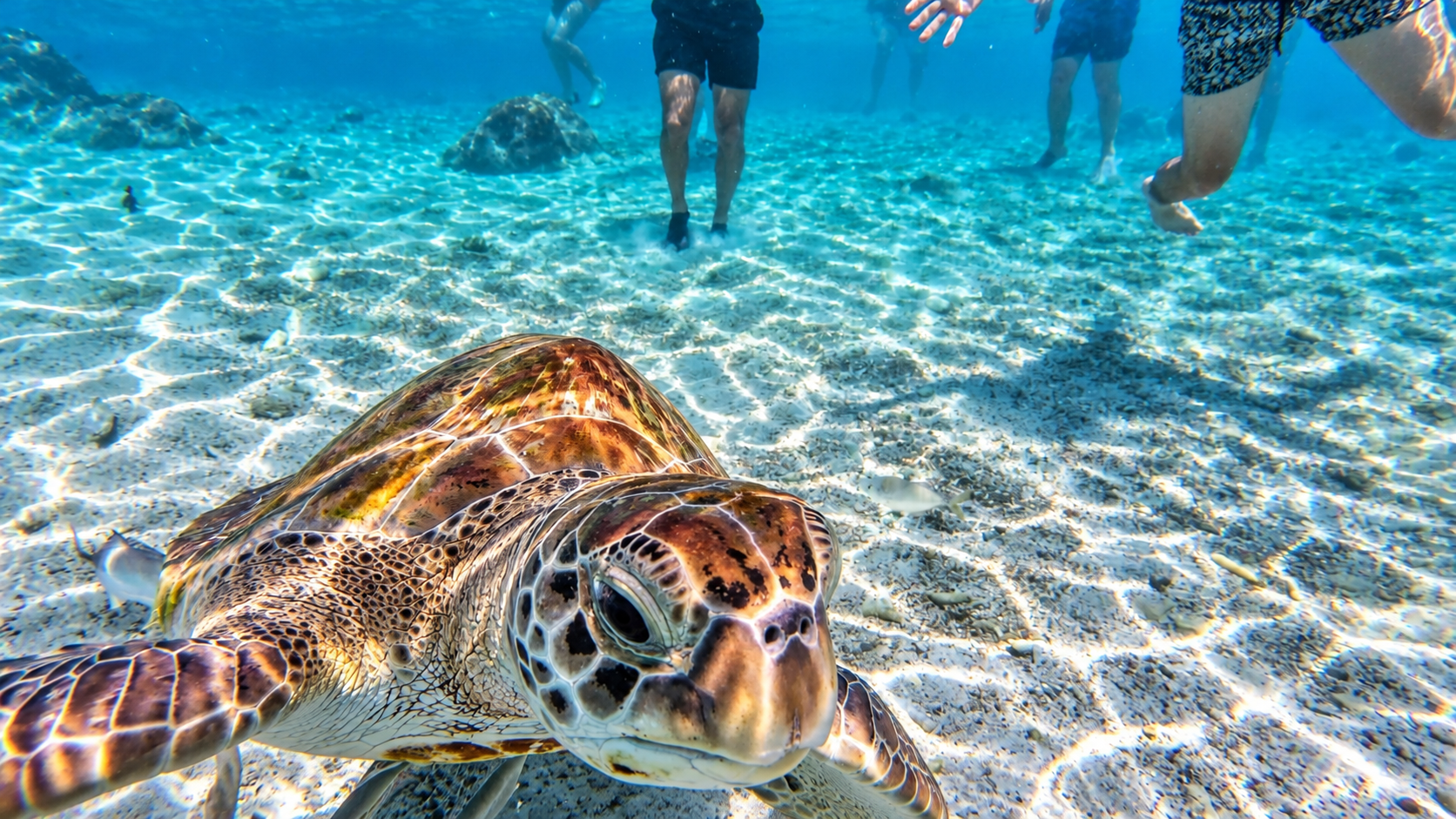
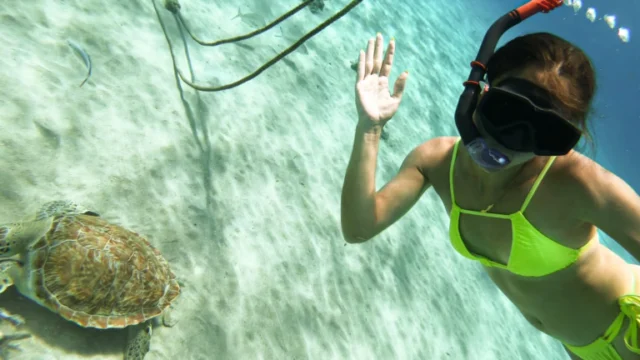
Snorkeling with turtles in Curaçao is one of the best wildlife experiences in the Caribbean, and doing it responsibly comes down to a few simple rules: keep your distance, never touch, chase or feed a turtle, and stay off the coral and seagrass. Sea turtles are fully protected in Curaçao, and the way visitors behave in the water directly affects their health. This guide explains what responsible turtle snorkeling looks like in practice, why the rules matter, and how to choose a tour that follows them.
Quick tips: the turtle code in one minute
- Look, do not touch. No hands on shells, flippers or heads, even if a turtle swims right up to you.
- Never feed them. Not fish scraps, bread or anything else.
- Give them space, especially when they rise to the surface to breathe.
- Do not chase or block their path. Let the turtle decide how close it comes.
- Float quietly. Slow fin kicks, minimal splashing, no diving down on top of a turtle.
- Protect the habitat. Do not stand on coral or seagrass, and use reef-safe sunscreen or a rash guard.
- Skip anyone offering to bring a turtle to you for money or a photo.
Why responsible snorkeling with turtles in Curaçao matters
Curaçao’s waters are home to several sea turtle species. According to the WIDECAST Curaçao country page, green, hawksbill and loggerhead turtles forage around the island, and green, hawksbill, loggerhead and leatherback turtles nest here. All sea turtles have been fully protected in Curaçao since 1996. Green and hawksbill turtles are the ones snorkelers are most likely to meet, and they can be seen year round.
Popular turtle beaches have become very busy. In 2025, WWF Dutch Caribbean and Sea Turtle Conservation Curaçao raised concerns about tourist behavior at Playa Piskado, including people luring and touching turtles and a case of a turtle being steered toward a tourist in exchange for money. Conservationists warned that some turtles become dependent on human contact and food, which can lead to health problems such as excessive weight gain, and that crowding also disrupts the local fishermen who work from the beach. You can read the background in this Curaçao Chronicle report on the WWF warning.
The good news is that every snorkeler can help. When visitors keep a respectful distance and leave turtles to behave naturally, the encounters stay calm, the animals stay healthy, and the experience is better for everyone in the water.
The rules explained
Do not touch
Turtles in Curaçao can look relaxed around people, but touching still causes stress and can spread bacteria. WWF Dutch Caribbean’s 2023 guidelines are clear: do not touch the turtles. That includes resting a hand on a shell for a photo or gently pushing a turtle away when it comes close. If a turtle swims toward you, stay still, keep your hands to yourself and let it pass.
Do not feed
At Playa Piskado, fishermen clean their catch and toss scraps into the water, which is one reason turtles gather there. That is part of the beach’s working life, but it does not make feeding by visitors acceptable. Food from people changes turtles’ natural behavior and diet. Never bring food into the water and politely decline if someone offers you scraps to attract a turtle.
Keep your distance and let them breathe
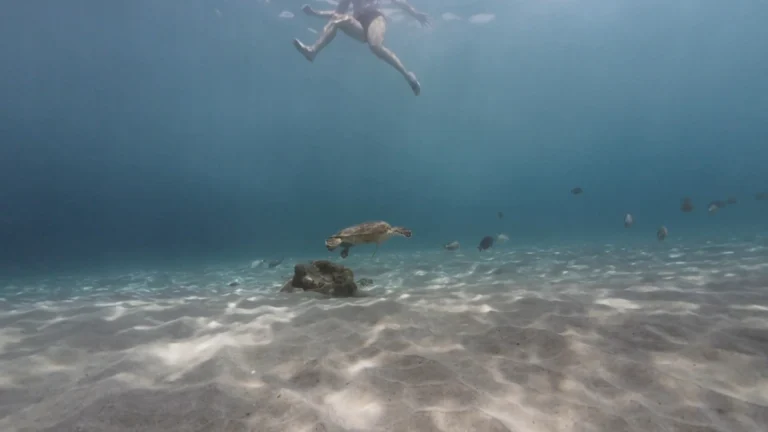
Sea turtles breathe air and need to reach the surface regularly. A turtle surrounded by snorkelers at the surface may struggle to take a breath calmly. Stay to the side rather than directly above a turtle, and never form a circle around one. A useful habit is to hang back and watch from a few body lengths away; you will often get a better view of natural behavior that way.
Do not chase
If a turtle swims away, let it go. Chasing a turtle across the bay is stressful for the animal and exhausting for you. There are usually other turtles nearby on a good day, and patience is rewarded far more often than pursuit.
Protect the reef and seagrass
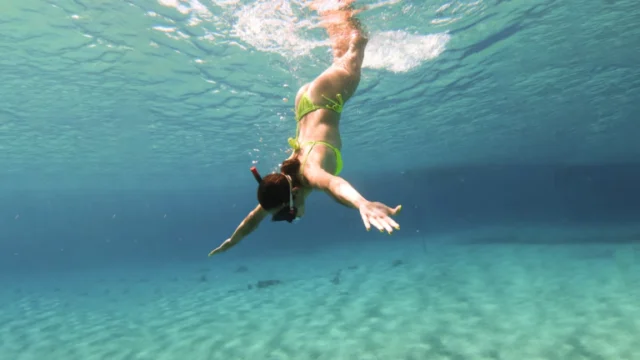
Green turtles graze on seagrass and algae, and hawksbills feed around the reef. Standing on coral or kicking up the seabed damages the very habitat that keeps turtles coming back. Enter and exit at sandy spots, float horizontally, and if you need a rest, lift your head and tread water or hold onto a guide’s float rather than standing on the bottom.
How to be a turtle-friendly snorkeler
Before you get in
- Check your mask fits and does not leak, so you are not stopping and standing up every few minutes.
- Choose reef-safe mineral sunscreen, or cover up with a rash guard or swim shirt instead.
- Leave food, drinks and loose items on shore.
- If you are not a confident swimmer, wear a snorkel vest so you can float calmly instead of splashing.
In the water
- Swim slowly with gentle kicks below the surface rather than big splashes.
- Approach from the side, never from above or head-on.
- Keep groups small and spread out so a turtle always has an open path.
- Watch where the boats are at fishing beaches and stay clear of moorings and lines.
- Limit your time with any one turtle and move on.
Taking photos responsibly
Great turtle photos do not require getting close. Use your phone’s wide lens, stay at the turtle’s level, and wait for it to swim through your frame. Avoid selfies that involve reaching toward a turtle, and never hold or steer one for a picture. A calm turtle gliding over seagrass makes a far better photo than a startled one.
Where to snorkel with turtles responsibly
Playa Piskado (Playa Grandi) on the west side is the best-known turtle beach and also the busiest. Going early in the day, on a quieter weekday or on a day with fewer cruise ships in port helps reduce crowding. Turtles also forage along much of the west coast, so they can turn up on other snorkeling beaches too. For a full rundown of locations and timing, read our guide to where to swim with sea turtles in Curaçao, and for more island ideas see our list of the best things to do in Curaçao.
How to choose a responsible turtle tour
A good guide makes the biggest difference to how turtles are treated. Before you book, ask:
- Do you brief guests on the no-touch, no-feeding rules before entering the water?
- How many guests are in the water with one guide?
- Do you use food or any method to attract turtles? (The right answer is no.)
- What happens if a turtle is not around? A responsible operator will not promise guaranteed touches or close-ups.
- Do you provide flotation for weaker swimmers so they can stay calm in the water?
You can see all of our small-group and private options on our activities and tours page.
Snorkel with turtles the respectful way
If you would like a guide who knows the turtles’ habits and keeps encounters respectful, our private sea turtle snorkeling and beach tour is a relaxed way to do it. Because the tour is private, there is no crowd of strangers around the turtles, there is time to go over the turtle code before you get in, and snorkel gear and life vests are provided, so nervous swimmers can float comfortably and simply enjoy watching.
FAQ
Can you touch sea turtles in Curaçao?
No. Sea turtles are fully protected in Curaçao, and conservation groups ask visitors never to touch them because it causes stress and can spread bacteria. Watch from a respectful distance instead.
Is it okay to feed the turtles at Playa Piskado?
No. Even though fishermen toss scraps into the water, visitors should never feed turtles. Feeding changes their behavior and diet and can make them dependent on people.
Which sea turtles will I see while snorkeling in Curaçao?
Green sea turtles are the most common sighting for snorkelers, and hawksbill turtles are also seen around the reefs. Both can be found year round.
Is reef-safe sunscreen required in Curaçao?
No, Curaçao does not have a reef-safe sunscreen law. We do kindly ask everyone to please use reef-safe sunscreen, or wear a rash guard, to protect the coral and seagrass that turtles depend on.
What is the best time to snorkel with turtles without crowds?
Early in the day is usually calmest. Checking the cruise ship schedule and avoiding busy multi-ship days also helps you find quieter water.