Sea Turtles in Curaçao: Which Species You Will See and Where
Meet the Curaçao sea turtles: green, hawksbill, loggerhead and leatherback. How to tell them apart, where to see them and how to snorkel responsibly.

Updated October 30, 2026 · 7 min read
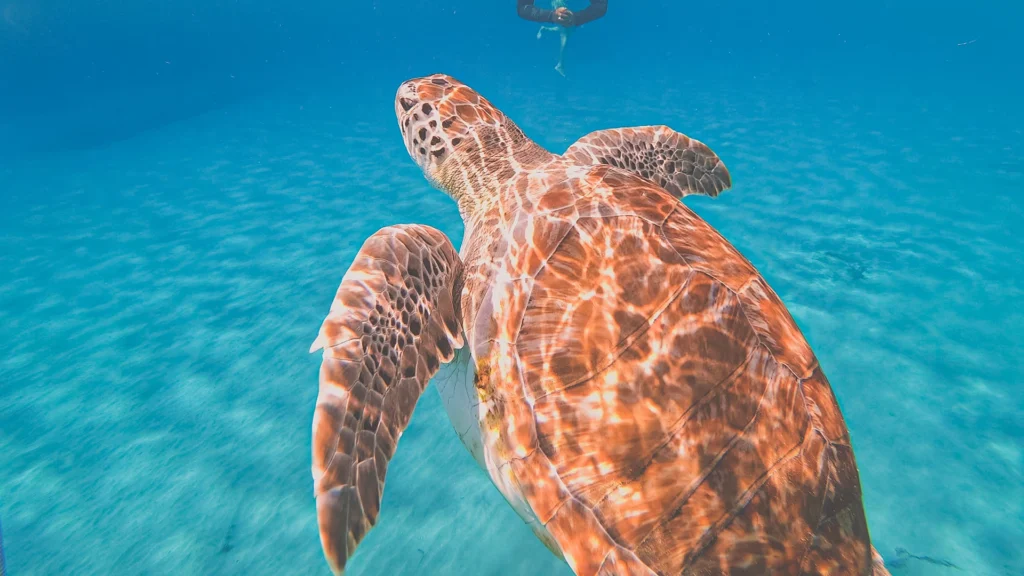
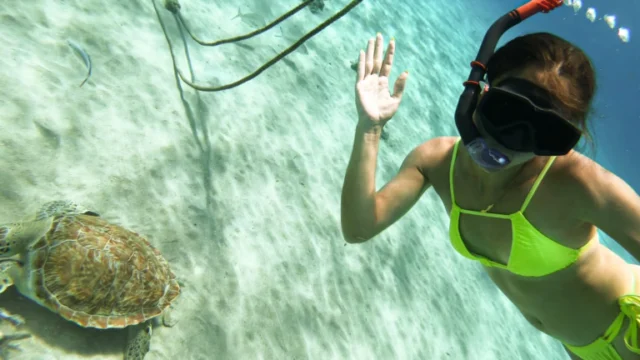
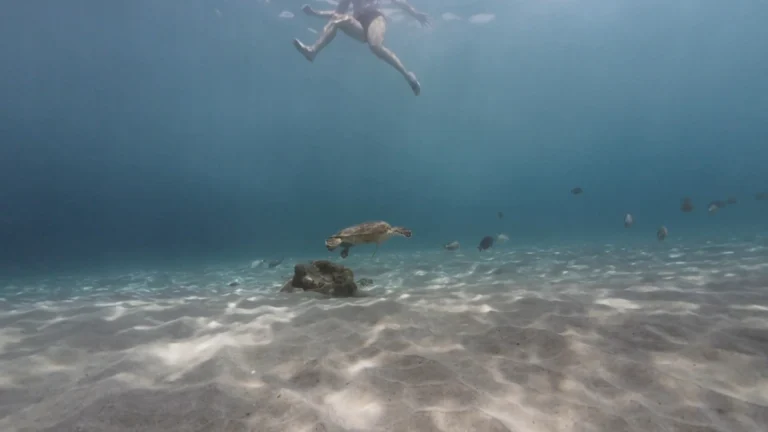
The Curaçao sea turtles you are most likely to see while snorkeling are green turtles, followed by hawksbills. Loggerheads visit and nest here but are seen far less often, and leatherbacks are very rare close to shore. Green turtles graze in shallow bays such as Playa Piskado and Playa Lagun, while hawksbills are more often spotted along reefs and rocky drop offs.
We snorkel with turtles on the west coast almost every day, and the most common question we hear is simply, “What kind of turtle was that?” This guide covers the four species recorded around the island, how to tell them apart in the water, where each one tends to show up and how to watch them without causing harm.
Quick facts
- Species that nest on Curaçao: green, hawksbill, loggerhead and leatherback, according to the WIDECAST Curaçao country page.
- Species that feed around the island: green, hawksbill and loggerhead.
- Seen year round: green and hawksbill turtles.
- Nesting: roughly May to December on Curaçao, within the wider Dutch Caribbean season of April to December.
- Legal status: all sea turtles in Curaçao have been fully protected since a 1996 decree.
- Golden rule: look, do not touch, chase or feed.
Which species of Curaçao sea turtles will you see?
Green turtle (Chelonia mydas)
The green turtle is the species most snorkelers meet. Adults feed mainly on seagrass, which is why they gather over sandy, grassy bottoms in calm bays. Juveniles also eat jellyfish and small crustaceans. Green turtles have a smooth shell and a short, rounded head, and they often rest on the bottom or surface slowly to breathe, which makes them easy to watch from a respectful distance.
Their name comes from the greenish color of their body fat, not their shell, which can look brown, olive or almost black underwater. Globally, the green turtle is listed as Endangered by the IUCN.
Hawksbill turtle (Eretmochelys imbricata)
Hawksbills are smaller and more elusive. Look for a narrow, pointed beak, like a bird of prey, and a shell with a serrated, saw toothed edge toward the back. Hawksbills feed on sponges, so you are more likely to see them moving along coral reefs, rocky walls and drop offs than over seagrass. The hawksbill is listed as Critically Endangered worldwide, so every sighting is special.
Loggerhead turtle (Caretta caretta)
Loggerheads have a very large head and powerful jaws, built for crushing hard shelled prey such as conchs and crabs. They tend to stay in deeper water and around reefs, so snorkelers see them only occasionally. Loggerheads do nest on Curaçao. Globally they are listed as Vulnerable.
Leatherback turtle (Dermochelys coriacea)
The leatherback is the largest sea turtle in the world and has no hard shell, just a ridged, leathery back. Leatherbacks dive deep, migrate long distances and feed mainly on jellyfish far from shore. They are very rare around Curaçao and you should not expect to see one while snorkeling. The species is listed as Vulnerable globally.
WIDECAST also lists the olive ridley as an infrequent visitor to Curaçao, with little data available.
How to tell green and hawksbill turtles apart
Since these are the two species you will most likely meet, here is a quick checklist for the water.
- Head shape: green turtles have a short, rounded snout; hawksbills have a narrow, hooked beak.
- Shell edge: green turtle shells are smooth around the rim; hawksbill shells look jagged toward the rear.
- Where they are: greens graze over seagrass and sand; hawksbills hunt along reefs and rocks.
- Behavior: greens often rest calmly on the bottom; hawksbills tend to keep moving as they feed.
Where to see turtles in Curaçao
West coast bays
Playa Piskado (also called Playa Grandi) near Westpunt is the island’s best known turtle beach. Local fishermen clean their catch on shore, and the scraps draw green turtles into the shallow water every day. The entry is easy and turtles are often only a few meters from the beach. Playa Lagun, a small cove a short drive away, also has regular turtle sightings along with good reef snorkeling.
Reefs and wrecks
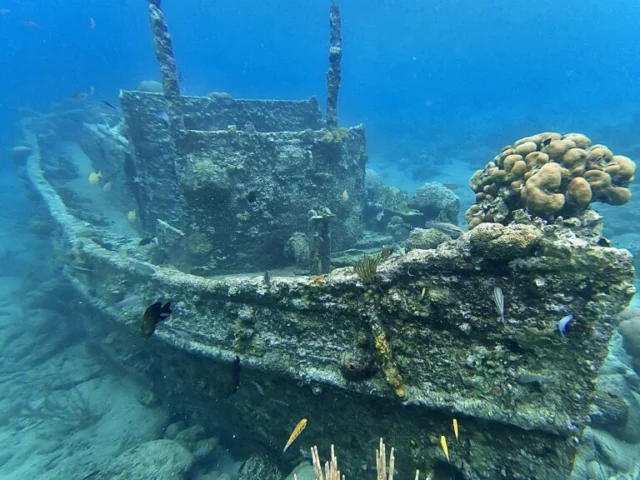
Hawksbills and the occasional loggerhead are more often seen on the reef. The Tugboat wreck near Caracasbaai and the reef sites along the leeward coast are good places to keep an eye out.
Klein Curaçao
The uninhabited island of Klein Curaçao, reached only by boat, is another spot where snorkelers regularly see turtles, and its beaches are also used for nesting.
Nesting beaches
Turtles nest on beaches across the island, including the small bays of Shete Boka National Park on the rugged north coast and the beaches of Klein Curaçao. Nesting happens at night, and hatchlings crawl to the sea in darkness. If you are on a beach at night during nesting season, avoid flashlights and never disturb a nest.
For a spot by spot breakdown with timing tips, read our guide on where to swim with sea turtles in Curaçao.
When is the best time to see turtles?
Green and hawksbill turtles live around Curaçao all year, so you can see them in any month. Within a day, we find early mornings calmer and less crowded at the popular west coast beaches, and calmer water also means better visibility. Nesting runs from roughly May to December, but nesting turtles come ashore at night, so it is not something visitors typically see on a day trip.
How to snorkel responsibly with sea turtles
Local conservationists have raised concerns about feeding, crowding and boat traffic at popular turtle beaches. These simple rules help keep the turtles wild and healthy:
- Keep your distance and never block a turtle’s path to the surface, since they need to breathe.
- Do not touch, chase or ride a turtle, even if it seems calm.
- Do not feed turtles, because it changes their natural diet and behavior.
- Do not stand on coral or seagrass, which are their food and habitat.
- Use reef safe sunscreen or wear a rash guard.
- Keep splashing and noise low, and float calmly instead of diving down on top of them.
Sea Turtle Conservation Curaçao (STCC) carries out research, nest monitoring, beach cleanups and education on the island, and helps turtles that are hooked or entangled. Supporting their work, or simply following these guidelines, makes a real difference.
Seeing Curaçao sea turtles with a local guide
Turtles are wild animals and no one can guarantee a sighting, but knowing where and when to look improves your chances a lot. A guide can also help nervous swimmers, handle the logistics of reaching the west coast and make sure the group keeps a respectful distance.
If you would like to snorkel with turtles in a small private group, our private Turtle Bay, cave and iconic beach tour takes you to the west coast at a relaxed pace, with time in the water and a stop at some of the island’s most photogenic beaches. You can see all our options on the activities and tours page, and for more ideas on the rest of the island, browse our best things to do in Curaçao.
FAQ
What kind of sea turtles live in Curaçao?
Four species are recorded nesting on Curaçao: green, hawksbill, loggerhead and leatherback. Green and hawksbill turtles are seen year round, and green turtles are by far the most common for snorkelers.
Can you swim with sea turtles in Curaçao?
Yes. Green turtles are regularly seen in calm west coast bays such as Playa Piskado and Playa Lagun, often in shallow water close to shore. Always keep your distance and never touch or feed them.
Are sea turtles protected in Curaçao?
Yes. All marine turtles in Curaçao have had full legal protection since 1996, and the green, hawksbill, loggerhead and leatherback are all listed as threatened species internationally.
When do sea turtles nest in Curaçao?
Green, hawksbill and loggerhead turtles nest on Curaçao from about May to December. Nesting and hatching happen at night, so avoid flashlights on beaches and leave any nest undisturbed.
Is it okay to feed the turtles at Playa Piskado?
No. Feeding changes the turtles’ natural behavior and diet. Watch them from a distance and let them feed on their own.